More than 15,000 farms vanished in the United States last year, removing 2.51 million acres of farmland. That area nearly equals the size of Hawaii’s Big Island. Most of that land won’t recover quickly—abandoned fields can take nearly a century to regain even half their original plant productivity.
Solar farms may speed up that process. A joint study by Argonne National Laboratory and the National Renewable Energy Laboratory found retired agricultural land can produce clean energy while also helping native ecosystems recover.
Native plants and pollinators return within years, not decades
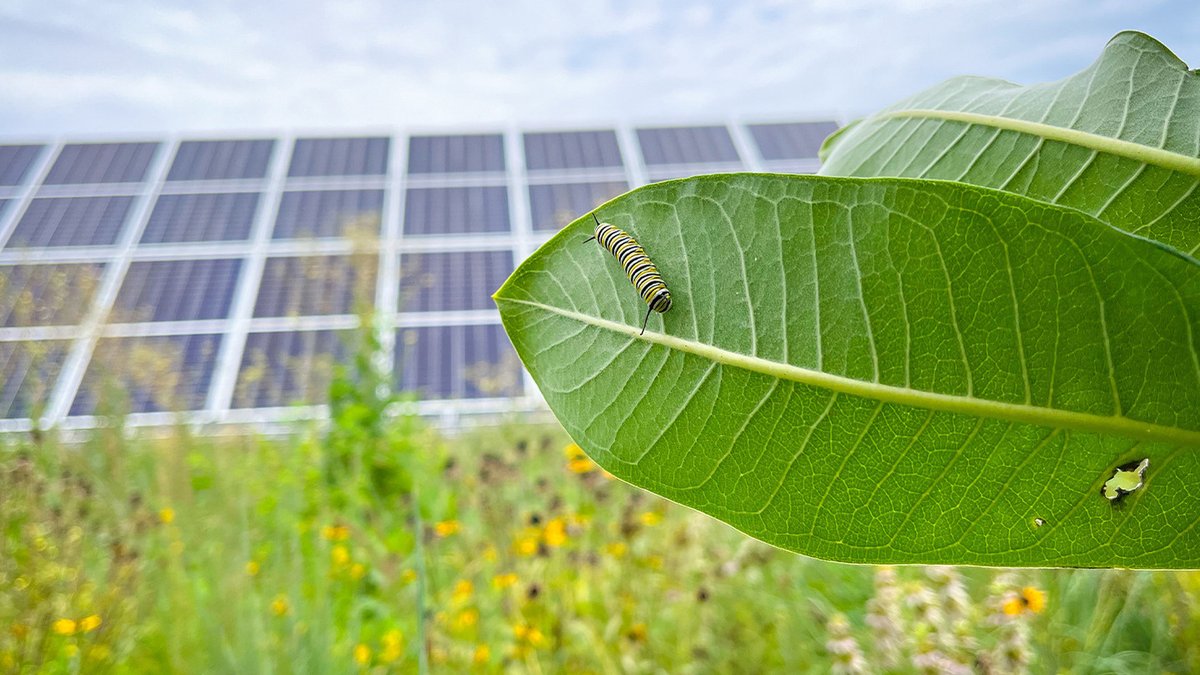
The work examined two solar sites in Minnesota. Within four years, the ground beneath and around the panels showed a sharp rise in native plants and insects. Native bees, nearly absent at first, became common by the fourth year. Other insects—wasps, moths, flies, butterflies, and beetles—increased threefold over five years.
Scientists also checked nearby soybean fields to measure spillover effects. Soybeans near the solar farm attracted more bees than those next to roads or in the middle of fields. Bee activity matched levels seen in soybean farms bordering Conservation Reserve Program grasslands, which are managed for wildlife.
Related: PBS Sues Over Lost Cloud Storage Data
This recovery required careful planning. Solar farms are typically built on graded land, where soil is compacted and leveled for infrastructure. At these sites, researchers minimized grading, flattening only areas needed for access roads. They planted native grasses and flowering species in test plots, selecting mixes suited to local moisture and sunlight.
The panels were mounted over six feet above the ground, allowing vegetation to grow underneath. Light sensors adjusted their angle, but even at their lowest point, the panels remained three feet above the soil, giving plants space to grow.
Insects weren’t the only beneficiaries. The findings suggest solar farms could provide financial relief for farmers facing slim profits. In the Midwest, solar lease offers now reach $1,250–$1,500 per acre. For farmers with tight margins, that income could determine whether they keep their land or sell it.
The speed of recovery in Minnesota surprised the team. Most abandoned farmland remains unused for decades before nature reclaims it. Here, recovery took less than five years.
Related: 5 Hidden iPhone Camera Settings to Improve Photos
As farmland continues to disappear, the need for solutions that serve both energy and environmental goals will increase.
Sheep grazing under solar panels
The study highlights that solar farms can support grazing sheep. At one Minnesota site, the animals kept vegetation short without harming the panels. Shade from the arrays kept grass cooler and more palatable later into summer.
The approach offers another option for livestock farmers. Leasing land for solar could let them maintain operations without losing acreage. The sheep, meanwhile, help manage the site with little human effort.
Scaling this model won’t be simple. Minnesota’s climate and soil differ from other regions, and not all farmers can integrate solar. Still, the research shows what happens when energy production and land restoration work together rather than compete.





Leave a Reply