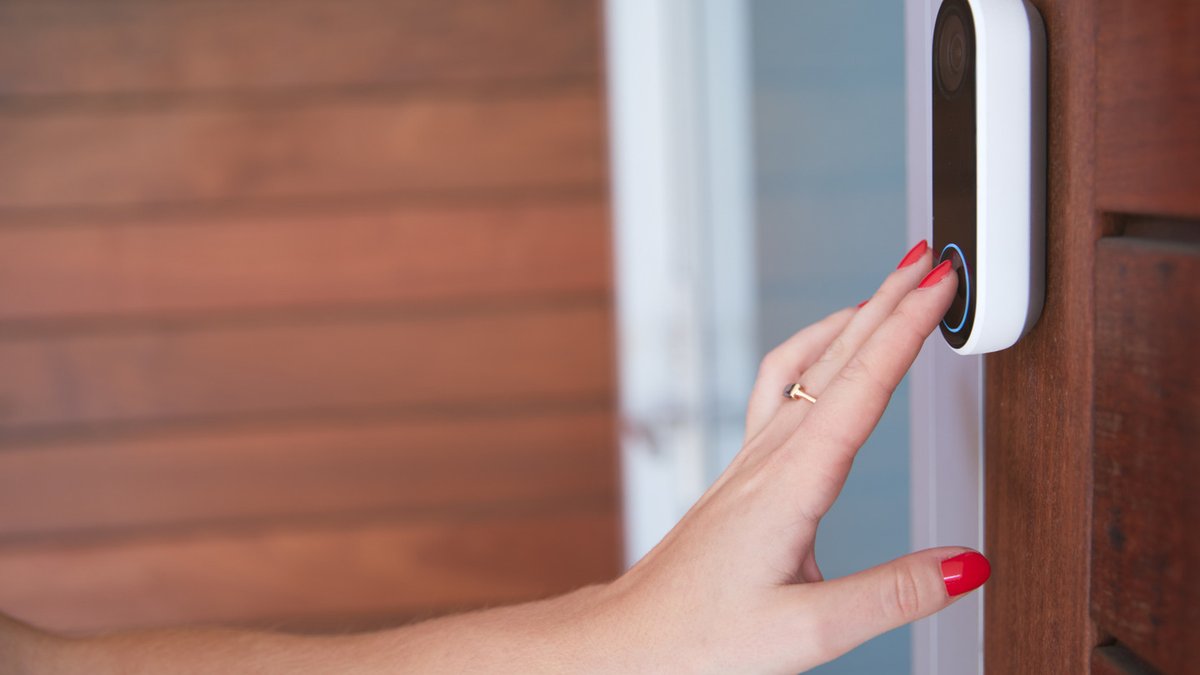
Few video doorbells operate in continuous recording mode, and efficiency drives this design choice. High-definition footage consumes significant storage capacity, while nonstop recording accelerates battery depletion—particularly for models without hardwired power. Manufacturers typically prioritize event-triggered clips over uninterrupted playback to conserve resources.
This means that when it’s time to adjust recording lengths, users will probably want to avoid max-length or continuous options to save resources. Most smart home security cameras and surveillance devices, such as a video doorbell, can record in two formats: continuous or timed event captures.
Recording Formats
Continuous recording, where available, means the camera or device records indefinitely, capturing everything it sees, even when nothing eventful is happening. Timed event captures, on the other hand, usually trigger on a specific action or detection alert and continue recording for a set period.
A great example of the latter is when movement is detected, or someone rings the doorbell; it begins recording for up to a minute or so afterward. That way, it captures everything important, and when users review the footage, they see the visitor approach, ring or knock, and eventually leave.
Customizing Recording Time
With timed event captures, users can also customize how long the device records after an event. Ring doorbells, for instance, let users choose between 15 and 120 seconds of recording time. Although total recording times vary by model and brand, an upper limit still exists, and users may want to avoid it.
Storage space can limit more than users think. Video doorbells, like most security cameras and surveillance systems, have storage limitations. When it comes to retaining footage digitally, the data is stored on drives, either internal drives inside the device or a remote NAS with hard drives.
Read Also: Solar Panel Efficiency Breakthrough Surpasses 33% Limit
Cloud storage is a third option, but those files are still being stored physically somewhere on a server in a data center. There are always limits to consider with the storage options above. Many security devices get around this by reusing available storage, rewriting old files or overwriting data.
Storage Limitations
That means backups are only kept for a certain time, likely between a week and 60 days. Auto-overwrite modes or loop recording automatically overwrite old video clips that are presumably no longer needed, though users can back up important clips. Even with loop recording, storage space is limited.
Most home security cameras need about 256 GB to 1 TB to capture 30 to 90 days of HD footage. Tapo says its C500 camera can store up to 40 days of 1080p footage on a 512 GB microSD card, or 10 days on a 128 GB card. Not all doorbells support MicroSD storage expansion.
The higher the video recording resolution, the more space users will need, and the longer they want continuous footage, the more storage they will need. To support this, video doorbell manufacturers tend to limit recording length and recommend timed event capture over other options.
Local Laws and Regulations
It is also important to consider local laws when using a video doorbell. Users can record on their own property in pretty much every state, as long as they are not recording someone in a private space. However, that does not mean there are no limitations.
Every state has distinct rules, and things can also get challenging depending on where that surveillance device is pointed. If it is mounted near the door but still points across the street at a neighbor’s home, that could cause issues, especially if the device records 24/7 and captures private areas.




Leave a Reply