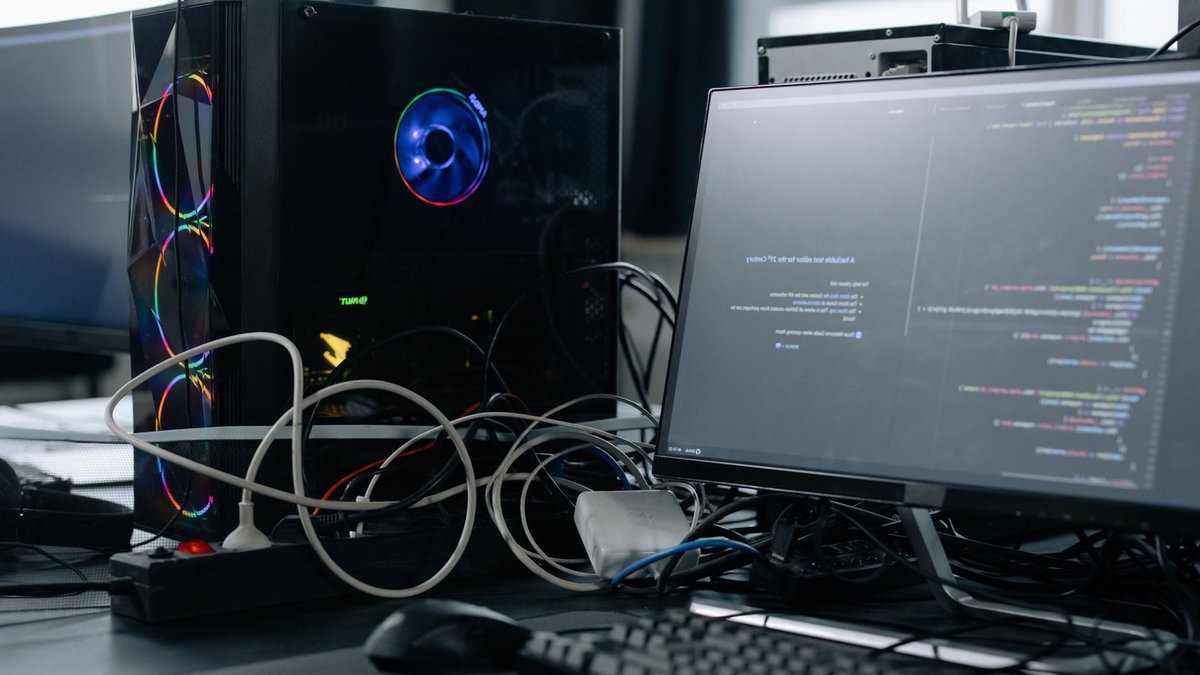
Estimating the cost to leave your PC on 24/7 reveals a modest impact on most household electricity bills, often ranging between $2 and $5 each month for a typical desktop or laptop that idles for two-thirds of the day.
Idle Power and Monthly Bills
The amount added depends on component mix, what stays active while idle, and the local electricity price. A system with a modest processor, 12 GB of memory and a mid-range graphics card usually draws about 30 W when not in use.
In a direct measurement using a P4460 Kill A Watt EZ meter, the same five-year-old desktop recorded an average idle draw of just under 30 W with the monitor unplugged, which corresponds to 0.03 kWh per hour. Multiplying that by the 16 idle hours each day confirms the 14.4 kWh monthly figure used in the cost calculations.
At an average rate of 18.3 cents per kilowatt-hour, as reported by the U.S. Energy Information Administration for July 2026, that draw translates to roughly 14.4 kWh per month and a cost of $2.64. Turning the display on during idle periods raises total draw to around 40 W, pushing the monthly expense past $3.50.
Read Also: Video doorbells have storage limitations
Regional electricity rates vary widely, from roughly 15 cents to 41 cents per kilowatt-hour in non-contiguous states. Consumers in high-cost zones can expect the same 30-W idle load to cost closer to $5 per month, while those in cheaper areas may see under $2.
High-Performance Systems and Their Expenses
Enthusiast rigs with powerful GPUs, multiple storage drives and extensive cooling can idle at 100 W or more. That level of consumption results in an estimated $9 monthly charge when the machine remains on for 16 hours each day.
Some users report idle draws near 300 W, which would generate almost $30 in electricity costs each month. Even without accounting for the eight hours of active use, such figures represent a few hundred dollars annually.
On the high end, owners of powerful gaming rigs or those living in regions with the upper-range electricity tariffs can see the monthly idle expense climb to $10 or more. The combination of a top-tier GPU, multiple SSDs and a premium power supply pushes the baseline draw well beyond the 100 W typical of enthusiast builds, and when paired with rates approaching 41 cents per kilowatt-hour, the bill accelerates quickly.
Read Also: Solar Panel Efficiency Breakthrough Surpasses 33% Limit
Ways to Reduce Idle Consumption
Software activity influences power use; leaving communication apps, file servers or media players running can add one to two watts to the baseline idle draw. Over time, that extra load translates into additional dollars on the bill.
Adjusting power profiles, undervolting the GPU or disabling unnecessary background services can trim consumption. Switching the computer to sleep or hibernate instead of keeping it fully powered reduces average draw to roughly 2 W, lowering the monthly cost to just a few cents.
Reading the electricity statement closely reveals the exact rate applied to each kilowatt-hour, enabling more precise calculations of a computer’s operating expense.





Leave a Reply