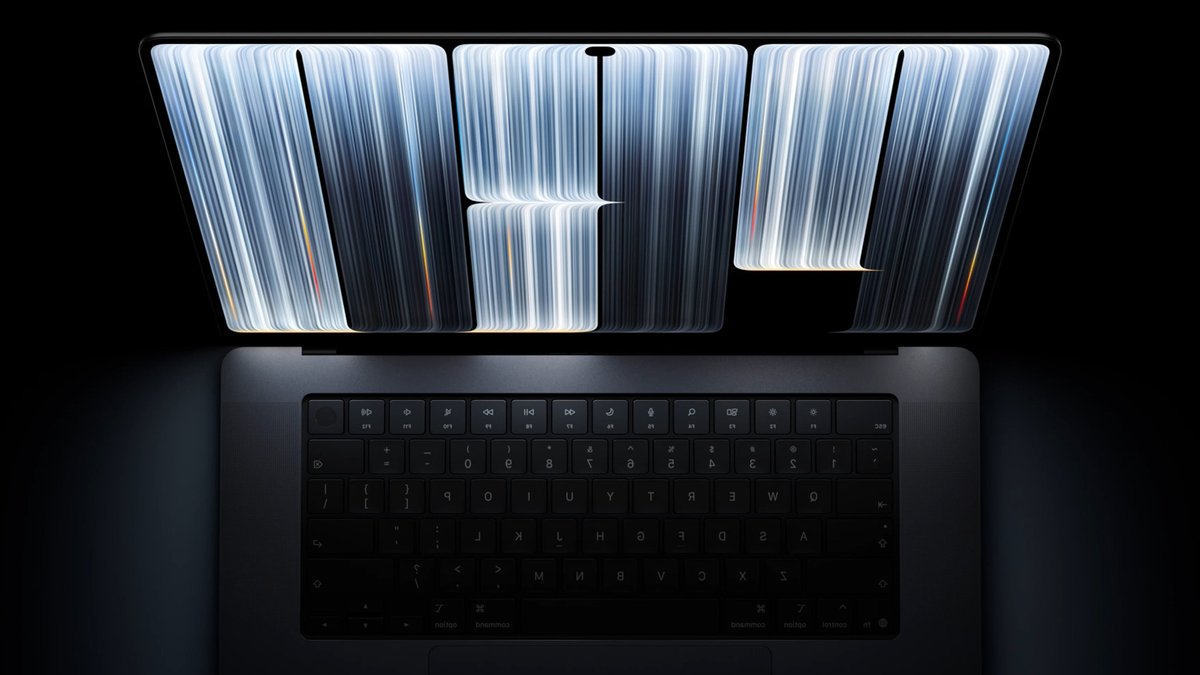
Apple announced its first touchscreen MacBook Pro models on October 28, ending years of speculation. The new machines use OLED panels, a technology the company has reserved for the iPad Pro and iPhone. The display, dubbed PROLED XDR, delivers a 10,000,000:1 contrast ratio and up to 2,000 nits of peak brightness. Users can now interact with the entire screen, with the new macOS 27 translating touch input into clicks automatically. The Dynamic Island at the top of the display now houses Spotlight, Live Activities, and Siri.
A New Design and Fan-Favorite Return
The chassis of the new MacBook Pro is thinner and lighter than the previous generation. The 14-inch model weighs 3 pounds, while the 16-inch model weighs 4 pounds. Apple also brought back the glowing logo on the lid, a feature it removed in 2015. The company redesigned the hinge to prevent the screen from rocking when touched, a common issue with touchscreen laptops. Apple added video stabilization to the camera feed for video calls to account for this touch interaction. The 16-inch is nearly a millimeter thinner and the 14-inch is half a millimeter thinner, and those slimmer borders grow the screens to 14.2 inches and 16.3 inches.
Apple spent years saying it had no interest in a touchscreen Mac, despite building prototypes. The company’s new CEO, John Ternus, spearheaded the project, arguing that buyers now expect the feature on laptops. The M5 Pro and M5 Max chips power the devices, with the same specifications found in the March lineup. The machines feature three Thunderbolt 5 ports, an HDMI port, an SDXC card slot, MagSafe, and a headphone jack. The M5 Pro and M5 Max processors carry considerably more CPU and GPU cores than the M6 chip and far higher memory bandwidth.
The new 14-inch model starts at $2,899 and the 16-inch at $3,399, making the 14-inch the most expensive MacBook Pro Apple has ever launched. This price represents a significant jump from the previous generation, which started at $2,199 and $2,699 respectively. For anyone upgrading from an Intel or M1 machine, the change offers years of improvements at once. Existing M5 Pro and Max owners, however, will pay a premium for a lighter body and an OLED panel without gaining any performance gains. The M5 Max versions cost considerably more, starting at $4,499 for the 14-inch and $4,799 for the 16-inch.
Configurations and Availability
The configurations available for these models extend beyond the base specifications. Buyers can select up to 128GB of unified memory and up to 16TB of storage. This memory bandwidth supports heavy workloads. The M5 Max chips offer significantly more CPU and GPU cores than the M6 chip found in the cheaper 14-inch model. It can support three external displays on M5 Pro and four on M5 Max.
These older versions start at $2,499 for the 14-inch and $2,999 for the 16-inch. The company also released a new 14-inch MacBook Pro on October 27. This machine uses the M6 chip and costs $1,999, though it uses a mini-LED display. Instead, buyers can now pick between two designs. The M6 14-inch MacBook Pro offers the newest chip, the existing chassis, and a mini-LED display at $1,999. Apple is keeping the non-touch M5 Pro and M5 Max models on sale too, at $2,499 for the 14-inch and $2,999 for the 16-inch if you want the extra power in a familiar chassis.
Availability and Launch Details
Pre-orders for the new touchscreen models opened on October 28. Customers can receive the devices on November 6. The 16-inch model costs $3,399. These figures make the 14-inch the most expensive MacBook Pro ever sold at launch. That price point surpasses the $2,799 Apple charged for the 17-inch model in 2006.
This price increase aligns with hikes seen in the iPhone and iPad lines due to higher memory costs. The new machines feature a six-speaker system with a new woofer design for deeper bass. Battery life runs up to 24 hours, and the six-speaker system gets a new woofer design that Apple says delivers 50% deeper bass. Before June, the 14-inch M5 Pro MacBook Pro started at $2,199 and the 16-inch at $2,699, so the touchscreen models represent a jump of at least $700 in four months.




Leave a Reply