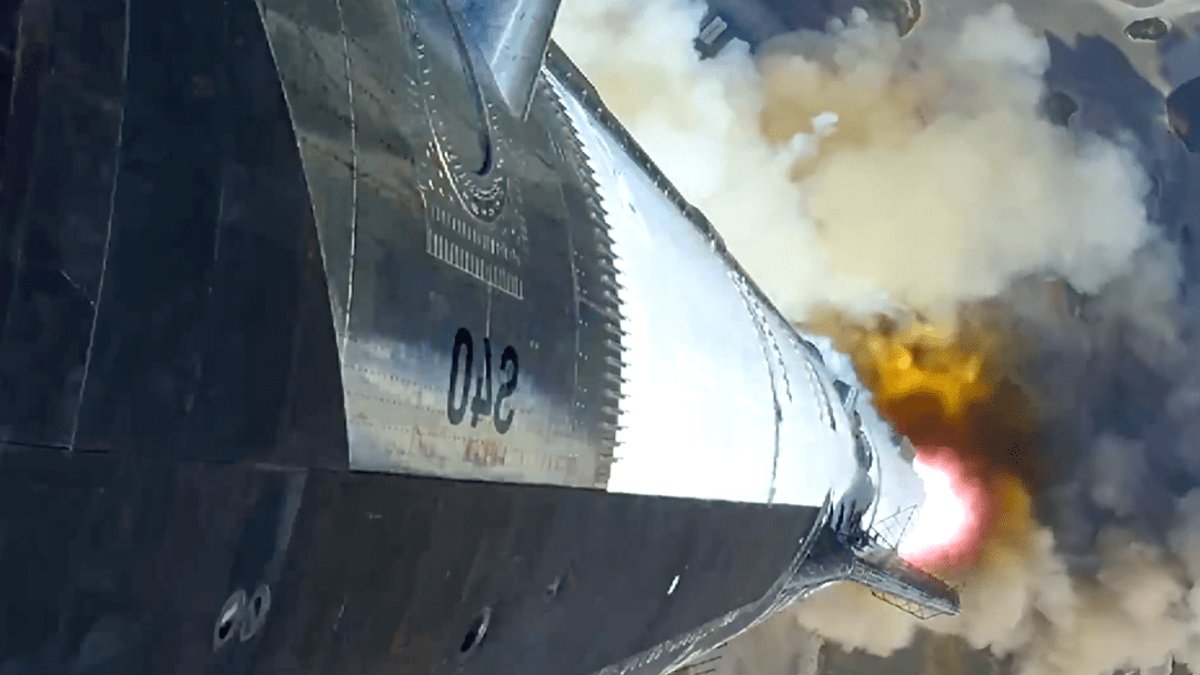
SpaceX launched the first third-generation Starlink satellites on Friday, marking a significant milestone for the company’s internet business. The flight used an upgraded version of the prototype Starship, the 13th test flight of the mega-rocket to date. However, the mission ended with another failure of the Super Heavy booster during a planned simulated landing in the Gulf of Mexico.
Booster struggles continue for Starship V3. This marks the second issue SpaceX has faced with the Super Heavy booster on this V3 version of Starship. During the first Starship V3 flight in May, the booster failed to separate properly from the upper stage. Friday’s launch saw the booster travel farther than the previous attempt, but it failed to fire all the engines needed for the landing burn. The booster exploded after hitting the water faster than expected.
SpaceX replaced six engines ahead of the Friday flight to address issues that caused the previous launch to abort immediately after ignition. The company has stuck to its “fly, fail, fix” approach to development. The stock took a hit last week following the abort, and shares dipped again after the booster failure. Trading volume has been heavy, with the stock falling from a peak of over $200 to $115 at Friday’s close.
Related: Tesla door handles could spark US safety rules
Upper stage recovery and new satellites
SpaceX achieved better results with the Starship V3 upper stage. The Ship lost an engine during the first V3 launch in May, but this time it flew smoothly. The upper stage deployed the new Starlink satellites and survived the harsh forces of atmospheric reentry. It performed a simulated landing in the Indian Ocean about an hour after liftoff.
The Ship didn’t explode upon impact, unlike previous missions. Instead, it floated in the water, allowing SpaceX to use a drone to examine the heat shield tiles on its underside. The new V3 Starlink satellites burned up in the atmosphere roughly 20 minutes after deployment. This is normal behavior since Starship is not yet capable of reaching Earth orbit, but the company successfully communicated with all satellites while they were in space.
The new satellites improve the economics of the Starlink network. SpaceX has stated that launching 60 of these V3 satellites on Starship provides a “potential twenty-fold increase” in downlink capacity compared to a single Falcon 9 flight. However, the company faces a challenge: if Starship expends the Super Heavy booster rather than reusing it, those gains may not be realized.





Leave a Reply