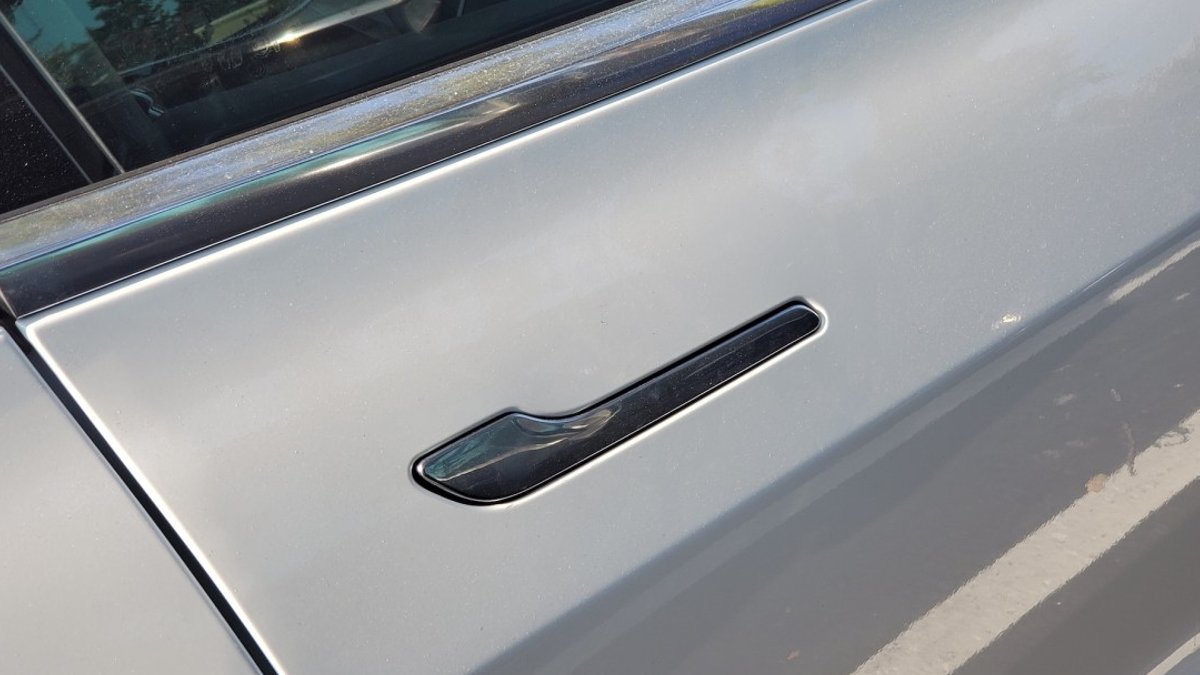
U.S. regulators are examining whether current vehicle door designs, including the flush, electronically operated handles found on many Tesla models, meet federal safety standards for emergency egress.
Rulemaking petition prompts NHTSA action
The National Highway Traffic Safety Administration announced it has accepted a petition to begin rulemaking that could require a mechanical emergency door release system. The filing, first reported by the outlet, follows a series of incidents in which drivers and passengers have become trapped inside cars after power failures or crashes.
The petition targeted the 2022 Tesla Model 3, arguing that its emergency release does not comply with existing motor vehicle standards. While NHTSA declined to open a defect investigation, it said the issue is better addressed through a formal rulemaking process.
“Granting a rulemaking petition is not a decision by NHTSA to issue a new safety standard, but commences the process of gathering input to make an informed decision,” the administration said in an emailed statement. Officials will collect data and public comments before deciding if a new rule is warranted under the Vehicle Safety Act.
Incidents and investigations raise concerns
Less than a year ago, NHTSA opened a probe after receiving nine owner reports of being unable to open the doors on Tesla vehicles, some involving children still inside. Those complaints coincided with Bloomberg’s investigation into multiple crashes where occupants were trapped.
Related: OpenAI launches real-time AI voice platform for businesses
Investigators noted that Tesla’s manual door releases are located only inside the cabin, and the exterior handles rely on sufficient voltage from the battery system. If the electrical lock fails to receive enough power, the handle may not function, leaving occupants unable to exit.
Franz von Holzhausen confirmed last year that the company was working on a redesign of its door handles. Rivian, another EV maker, also announced changes to its interior door handle on the upcoming R2 SUV, moving the manual release to a more visible spot near the powered handle.
The rulemaking process does not guarantee new standards will be adopted. “Commencing” rulemaking simply means the regulator will explore the issue further, according to NHTSA.
The issue draws industry attention.
While the agency gathers input, manufacturers may need to consider how their door designs perform under power loss. The potential rule could affect all automakers, not just Tesla, if it leads to a broader safety requirement.
Related: Intuit to showcase AI infrastructure rebuild at VB Transform 2026
Some observers note that the move reflects a growing focus on occupant egress in electric vehicles, where traditional mechanical linkages are often replaced by electronic controls. This shift raises questions about how quickly safety standards can adapt to new technology.
That perspective is worth noting: as more cars adopt sleek, flush designs, regulators must balance aesthetic trends with practical safety needs. A rule that mandates a clearly visible mechanical release could push automakers toward hybrid solutions that preserve both style and emergency functionality.
In the meantime, Tesla owners should remain aware that the interior manual release exists, even if it is not immediately visible from the outside. The company’s ongoing redesign efforts suggest future models may feature more accessible emergency mechanisms.
Should a new standard emerge, it would be incorporated into the Federal Motor Vehicle Safety Standards, which govern everything from crash performance to lighting. Compliance would be mandatory for any vehicle sold in the United States.





Leave a Reply