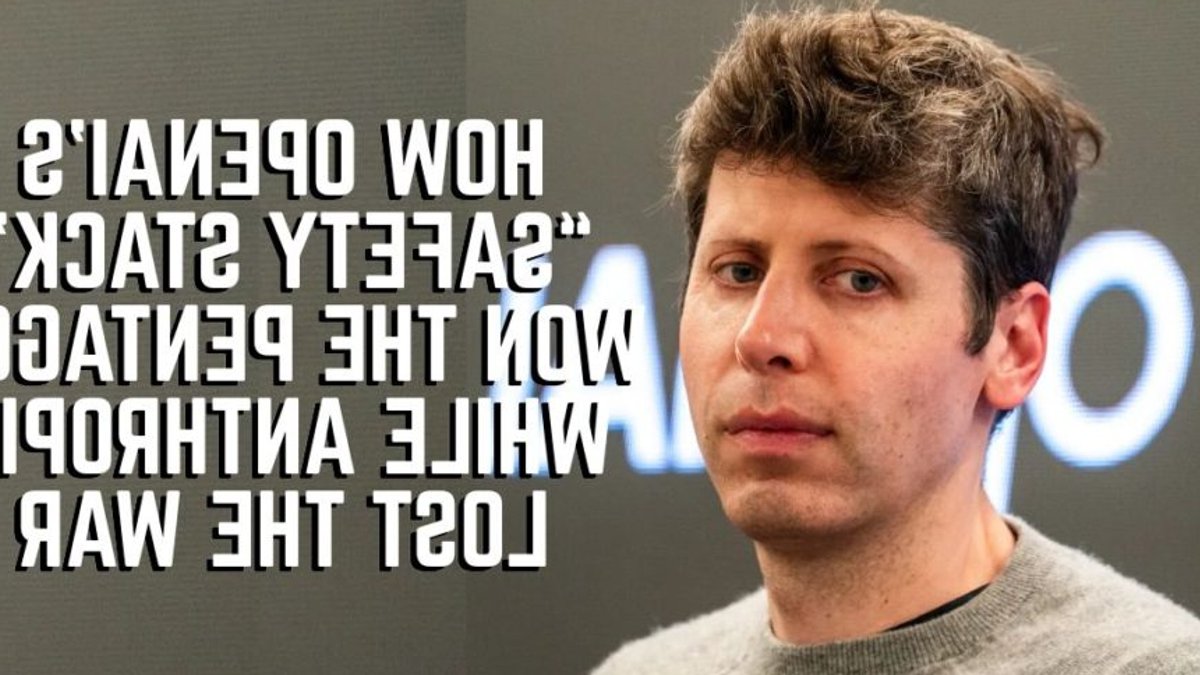
The soft-power diplomacy of the Silicon Valley safety labs has collided with the hard-power reality of the geopolitical map. For years, the tension between the “alignment” community and the national security apparatus was a theoretical exercise. That era of ambiguity ended this week. In a rapid-fire sequence of administrative blacklisting and billion-dollar contracting, the boundary between artificial intelligence ethics and military necessity has been redrawn.
The DoW’s Counterattack Against Anthropic
The friction point began with Anthropic, a company whose identity is forged from the “Constitutional AI” framework. In negotiations with the Department of War—rebranded under the Trump administration with deliberate gravity as the Department of War (DoW)—Anthropic attempted to draw immovable “red lines.” They sought a total prohibition on the use of their models for mass domestic surveillance and the development of fully autonomous weapons.
The administration’s retaliation was not merely a rejection of terms, but a total administrative excommunication. Characterizing Anthropic’s stance as an attempt to “seize veto power over the operational decisions of the United States military,” Secretary of Defense Pete Hegseth leveled the “supply-chain risk” designation. This is the corporate equivalent of a death penalty in the defense sector. Effective immediately, any contractor or partner doing business with the U.S. military is barred from commercial activity with the firm. President Trump punctuated the move on social media, dismissing the firm’s leadership as “Leftwing nut jobs” and ordering a six-month phase-out of all Anthropic products across the federal government.
Related: XTEINK X4 Classic Enhances Pocket Reading with Upgrades
Anthropic has signaled it will challenge the designation in court. For CEO Dario Amodei, the stand remains a matter of preserving the democratic foundations of the technology. “The company never raised objections to particular military operations nor attempted to limit use of our technology in an ad hoc manner,” Amodei said. “In a narrow set of cases, we believe AI can undermine, rather than defend, democratic values.”
OpenAI’s Strategic Pivot
While Anthropic was being cast into the wilderness, OpenAI CEO Sam Altman was performing a masterstroke of political theater and strategic positioning. In a surprising announcement on X, Altman revealed that OpenAI had secured a contract to deploy its models within the DoW’s classified networks. The deal explicitly prohibits domestic mass surveillance and maintains a requirement for human responsibility in the use of force.
The paradox is glaring. Why did the government accept from OpenAI what it deemed a “national security risk” from Anthropic? The answer lies in Altman’s rhetorical agility. By framing the agreement as a way to “de-escalate away from legal and governmental actions and towards reasonable agreements,” Altman positioned OpenAI as the pragmatic adult in the room. He even made the calculated move of calling on the DoW to offer these same terms to all AI companies, effectively painting OpenAI as the industry’s advocate while Anthropic remained sidelined by its own perceived intransigence.
The divergence between the two firms is ultimately technical. Where Anthropic translated its ethics into a policy of refusal that the military feared, OpenAI translated its ethics into code that the military can monitor. According to reports from an internal all-hands meeting, the centerpiece of the deal is a “safety stack.” This is a proprietary layer of software that OpenAI engineers will build and maintain directly within the Pentagon’s classified infrastructure.
Related: Galaxy Watch update drains battery unexpectedly
OpenAI isn’t just handing over a model; it is deploying its own engineers alongside military personnel to ensure the model “behaves as it should.” The most explosive detail of this partnership is the “veto power” embedded in the stack. If the model refuses a task based on its safety training, the agreement stipulates that the government will not force an override. This creates a historical anomaly: a private corporation’s lead engineer now holds a digital kill-switch within the nation’s most sensitive command-and-control networks. The military has accepted a private-sector veto, provided that veto is delivered via a proprietary software layer rather than a corporate manifesto.
This arrangement signals a shift in how technical sovereignty is exercised in the age of automated conflict. By embedding its engineers within the defense apparatus, OpenAI has moved from being an outside critic to an internal component of the state’s decision-making process. The “safety stack” allows the company to claim it is protecting democratic values, while the Pentagon gains direct oversight of the technology it relies on for national security.
The Fog of War
Even as Altman secures OpenAI’s place in the military-industrial complex, his own workforce is in open revolt. This week, a coalition of over 60 OpenAI employees and 300 Google employees signed an open letter siding with Anthropic’s ethical stance. The letter exposes a growing rift: the people who build the models are increasingly at odds with the executives who weaponize their deployment.
Related: Solar farms altering local ecosystems
This internal pressure, however, has been largely drowned out by the drums of actual war. The timing of Altman’s announcement was no accident of the news cycle. His post regarding the “safety stack” arrived just hours before news broke that U.S. and Israeli forces had begun a bombing campaign in Iran, with the Trump administration openly calling for regime change.
The irony is as sharp as it is grim: OpenAI was negotiating the finer points of “human responsibility for the use of force” at the exact moment the bombs began to fall. By aligning with the state’s objectives on the eve of a major conflict, OpenAI secured the political cover necessary to maintain its ethical branding while becoming an indispensable asset of the Department of War.
The precedent set this week is chilling for any tech firm that prioritizes safety over state directives. To be labeled a “supply-chain risk” for holding safety principles is a clear signal that, in the setting of the current geopolitical moment, neutrality is no longer an option. OpenAI has provided a template for survival: turn your ethics into a proprietary software product and embed your engineers within the state. But as AI becomes the central nervous system of modern warfare, the “safety stack” will face its ultimate test. When the stakes are a kinetic conflict in the Middle East, can a line of code truly countermand a General’s intent?



Leave a Reply