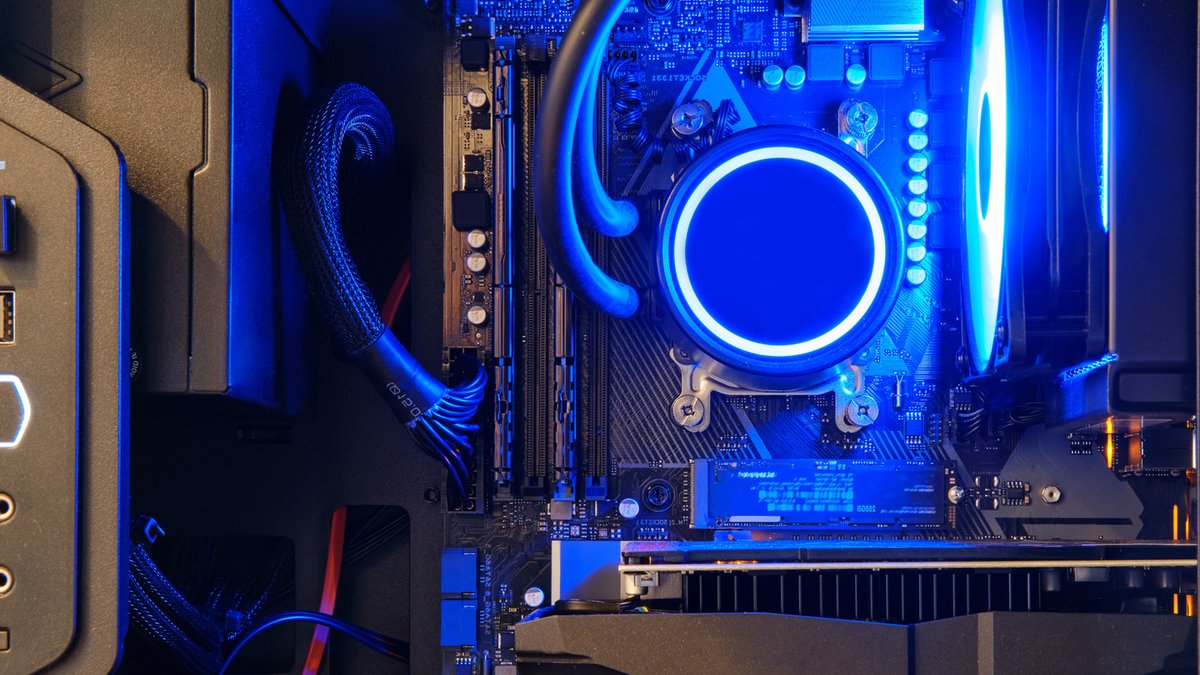
Laptops do not have liquid cooling systems like desktops do, due to physical limitations and design differences.
Those all-in-one or custom liquid cooling systems are not constructed for portability, having many parts, and can be sensitive to impacts or placement, making them heavier than their dry counterparts.
Liquid Cooling Advantages and Drawbacks
Installing an external liquid cooler would require a workaround, and a few gaming laptops already use external systems with small, detachable water-cooling docks or sealed, flat vacuum chambers containing a little liquid.
Liquid cooling brings advantages, allowing computers to sustain higher power draw at safer temperatures without overheating, as it dissipates heat more efficiently than air, and can lead to a quieter system.
However, using liquid cooling with laptops also has drawbacks, such as equipping the laptop with an outside apparatus, meaning more components to bring when traveling, which might encourage keeping the setup stationary.
This essentially means turning the laptop into a mini desktop computer, defeating the purpose of owning one.
Internal Liquid Coolers in Laptops
It’s rare for a laptop to feature a traditional internal liquid cooler, but Lenovo built a self-contained liquid cooler for VRAM cooling in the Lenovo Legion 9i, but only for the 2023 model.
Lenovo replaced the system with the Legion Coldfront Vapor system, which uses a high-performance air-based system with phase-change liquid to cool the components instead of looping liquid through.
Related: Anthropic CEO cautious on open AI over China risks
Other laptops use a similar design, sometimes referred to as the liquid cooling solution, which uses phase-change liquid and vapor chamber setup, like Asus with its IceCool and Vapor Chamber technologies.
This design uses phase-change with a small amount of deployed coolant inside copper heat pipes, where the heat from the CPU/GPU vaporizes the liquid coolant, and the vapor travels toward the cooler end, then condenses back into liquid, repeating the cycle.
For people who rely on their laptops for resource-intensive tasks, the idea of liquid cooling can be appealing, as it allows for more powerful performance without the risk of overheating, but the added bulk and complexity of external liquid coolers can be a significant drawback.
Portability vs Performance
In practice, this means that laptop users may need to choose between the portability and convenience of a traditional laptop and the increased performance offered by liquid cooling, which can be a difficult trade-off for those who need both.
As technology continues to evolve, it’s possible that we’ll see more innovative solutions to the problem of cooling laptops, but for now, the options are limited, and users must weigh the pros and cons of each approach.
Manufacturers like Lenovo and Asus are exploring different approaches to this problem, and it is interesting to see how they are developing new technologies.
They are working to improve the performance of laptops without sacrificing portability.




Leave a Reply