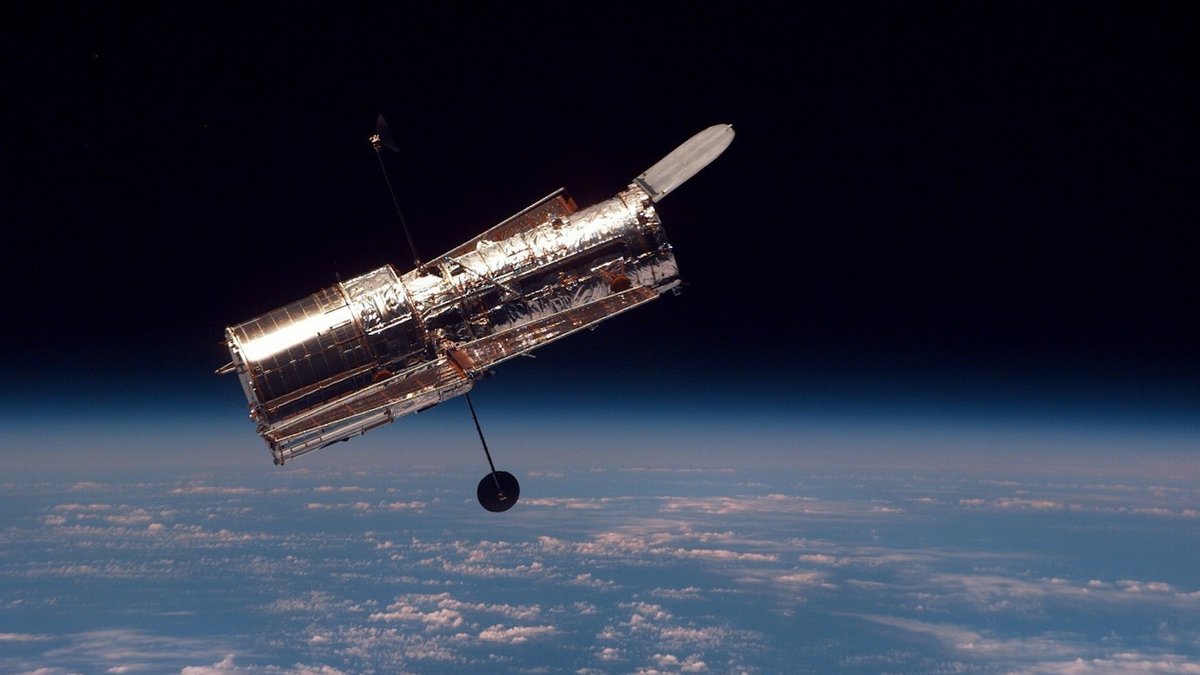
The Hubble Space Telescope has been orbiting Earth since its launch in 1990, delivering more than 1.7 million observations and appearing in over 23,000 scientific papers. Its aging hardware now faces a declining orbit that could end in an uncontrolled re-entry as early as 2033 or 2034 if corrective action is not taken.
Orbit decay threatens the observatory
Without an onboard propulsion system, the telescope relies on external vehicles for altitude adjustments. The last servicing mission, performed by the Space Shuttle in 2009, marked the final time the spacecraft could be lifted to a higher trajectory. Since then, atmospheric drag has steadily lowered its perigee.
Experts estimate that a rescue must occur by 2032 to raise the craft above a safe threshold of roughly 373 miles (600 km). Failure to act could result in a high-speed plunge that would destroy the instrument and erase a unique data source.
NASA solicits private-sector rescue concepts
In response, NASA issued a formal request for proposals, inviting commercial firms to submit ideas before the November 30 deadline. The agency outlined three distinct pathways: capture and boost the telescope, conduct an in-orbit refurbishment, or orchestrate a controlled deorbit at the end of its service life.
Jared Isaacman, now NASA administrator, has a personal stake in the effort. In 2022, while leading the Polaris Program, he partnered with SpaceX to explore using a Crew Dragon capsule for a similar boost maneuver, although that study never progressed to flight.
Read Also: iOS 15’s Driving Focus Reduces Driver Distractions
Current interest focuses on whether private launch providers can design a vehicle capable of grappling the aging platform and delivering the required thrust. No firm has yet confirmed participation, leaving the agency’s options uncertain.
Potential rescue strategies outlined
The first option calls for a dedicated spacecraft to rendezvous with the telescope, secure it with a robotic arm, and fire an upper stage to raise its orbit beyond the critical altitude. Achieving this would restore a stable trajectory for at least another decade.
The second approach involves a servicing mission that would replace aging components, upgrade scientific instruments, and possibly install a modest propulsion module. Such a mission could extend the observatory’s functional life while it remains in its current orbit.
The third path accepts the inevitability of re-entry but seeks to manage it safely, guiding the telescope to a remote oceanic splash-down or a designated atmospheric corridor to minimize risk to populated areas.
While the James Webb Space Telescope offers superior infrared capabilities, the Hubble uniquely captures ultraviolet and visible light, a range not covered by its successor. This makes the instrument valuable for studies of distant galaxies, star formation, and exoplanet atmospheres.



Leave a Reply